
Key Takeaways
- Water loses usable pressure as it travels upward, so tall buildings need a deliberate distribution plan.
- Pressure zones protect lower floors from excessive pressure while supporting reliable flow on upper floors.
- Booster pumps must be selected using flow demand, elevation, friction loss, incoming pressure, and required fixture pressure.
- Variable-speed controls can improve pressure stability when demand changes throughout the day.
- Routine inspections help identify leaks, vibration, clogged strainers, failing controls, and worn components before service is interrupted.
Table Of Contents
- Why Pressure Is Harder To Maintain In Tall Buildings
- Main Parts Of A High-Rise Water System
- How Pressure Zones Work
- Booster Pump Selection Basics
- Fixed-Speed And Variable-Speed Controls
- Maintenance And Warning Signs
- Reducing Energy Waste
- New York City Considerations
- Conclusion
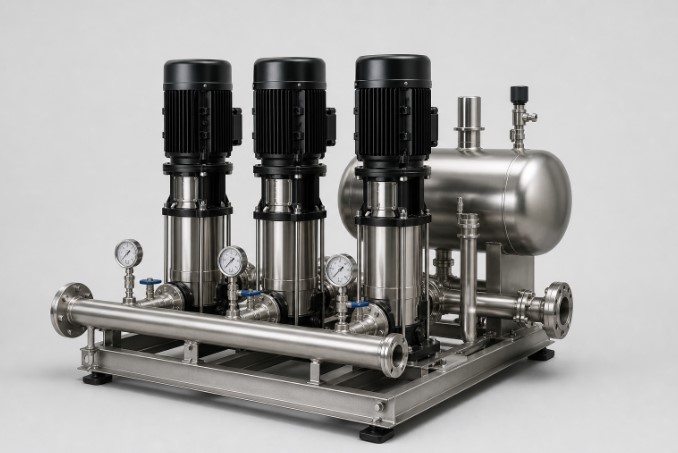
Reliable water service is a daily expectation in apartments, hotels, offices, and mixed-use towers, but it takes more than a powerful pump to achieve it. For property teams comparing new water booster systems NYC, Platinum Pump Corp. provides information on water booster pumps designed to raise pressure and support liquid circulation in applications ranging from buildings to larger municipal systems. The company serves commercial and industrial customers in New York City and surrounding areas, with pump sales, repair, service, and new-construction capabilities that make it a relevant local resource for building water-pressure planning.
The best approach starts with understanding the full water system, including supply conditions, occupancy, pipe layout, fixture demand, and access for future maintenance. A booster pump can solve an elevation-related pressure problem, but it cannot correct every issue on its own.
Why Pressure Is Harder To Maintain In Tall Buildings
Water must overcome gravity to reach higher floors. As elevation increases, available pressure at the fixture decreases. Long pipe runs, undersized piping, bends, valves, filters, backflow devices, and periods of heavy demand add further resistance. In a residential tower, residents on upper floors may notice weak shower flow during the morning rush, even when lower floors have adequate pressure.
A booster pump increases fluid pressure, but high-rise systems often need more than one pressure strategy. Supplying every floor from a single high-pressure source may benefit the top of the building while creating damaging pressure conditions at the bottom.
Main Parts Of A High-Rise Water System
- Incoming water service: Brings water from the municipal main into the building.
- Storage or break tank: Stores water and can separate building demand from limits in the incoming supply.
- Booster pump set: Adds pressure when the street supply cannot meet the required demand.
- Pressure-reducing valves: Lower pressure in portions of the building where it would otherwise be too high.
- Pressure tank: Helps stabilize pressure and reduce the frequency of pump starts.
- Control panel and sensors: Monitor pressure, pump status, alarms, and operating conditions.
- Check valves: Prevent reverse flow through pumps and piping.
How Pressure Zones Work
Pressure zoning divides a tall building into smaller vertical sections, such as lower, middle, and upper floors. Each zone receives only the pressure it needs. This reduces stress on fixtures, valves, and piping while making it easier to maintain dependable flow at the highest occupied levels.
Common System Arrangements
- Single central booster: Appropriate for smaller buildings or limited-height applications with relatively consistent demand.
- Multiple booster zones: Use separate pump sets or control arrangements for different building sections.
- Roof tank distribution: Pumps water to elevated storage, then uses gravity to serve lower areas.
- Hybrid design: Combines storage, pumps, pressure-reducing valves, and zoning to suit the building.
Booster Pump Selection Basics
Pump selection should be based on field data and engineering calculations, not simply the number of floors. Building teams should document incoming pressure at different times, peak demand, elevation head, friction loss, target pressure for each zone, electrical capacity, available mechanical-room space, and the need for standby equipment.
A Practical Selection Process
- Confirm the building height, occupancy, fixture count, and intended future use.
- Measure incoming pressure during normal and high-demand periods.
- Estimate expected peak flow rather than relying on average daily consumption.
- Calculate elevation and piping losses through risers, fittings, meters, valves, and filters.
- Set pressure targets by zone, then compare those requirements with pump curves.
- Review redundancy, noise, vibration isolation, controls, service clearances, and replacement access.
Fixed-Speed And Variable-Speed Controls
Fixed-speed pumps operate at a set motor speed and are often paired with pressure switches and tanks. They can be a practical choice where demand is predictable, and system complexity must remain low. Their main maintenance focus is the motor, pump, tank, valves, and start-stop sequence.
Variable-speed systems use sensors and drives to adjust pump speed as demand changes. They can maintain steadier discharge pressure and avoid running at full output when the building needs less water. However, they require properly located sensors, suitable programming, drive maintenance, and staff or service support capable of diagnosing and controlling issues.
Maintenance And Warning Signs
Routine Maintenance Plan
- Monthly: Review pressure readings and alarms, inspect for leaks, listen for unusual vibration, and keep the pump room clean and accessible.
- Quarterly: Inspect strainers, test automatic controls and standby pumps, check motor current, and compare readings with normal operating data.
- Annually: Inspect seals, bearings, couplings, alignment, sensors, pressure switches, and control settings. Update service records and replacement plans.
Symptoms That Need Attention
- Low pressure on upper floors can indicate inadequate output, a clogged strainer, a closed valve, a pipe restriction, or a motor problem.
- Frequent starts and stops may indicate a leak, improper tank settings, or a control issue.
- Loud operation can suggest cavitation, air in piping, worn bearings, or misalignment.
- Water hammer may result from fast-closing valves, failed check valves, or abrupt flow changes.
Reducing Energy Waste
Energy performance improves when pumps are matched to actual demand rather than oversized for every possible condition. Use pressure zones rather than over-pressurizing the entire building, repair leaks quickly, keep strainers clean, track run hours, and review variable-speed settings as occupancy changes. A worn pump that runs continuously or operates far from its intended duty point can quietly increase utility costs.
New York City Considerations
New York City properties often combine high occupancy, older risers, limited mechanical room space, and renovation work that must minimize tenant disruption. A site review should determine whether current equipment reflects today’s occupancy, whether upper floors lose pressure during peak periods, and whether lower floors are protected from excessive static pressure. Domestic water boosters must also remain distinct from fire-protection pumps, which have separate life-safety design and testing requirements.
Conclusion
Steady water pressure in a high-rise building depends on balanced design, accurate pump sizing, appropriate controls, and consistent maintenance. When building teams monitor system performance, address warning signs early, and plan upgrades around real demand, they can improve resident comfort, reduce emergency repairs, and extend equipment life.